Solid Core Interior Door Construction
This technical resource explains the internal structure, materials, and performance characteristics of solid core interior doors, focusing on construction principles rather than product selection.
Solid core interior doors are engineered with a dense internal core designed to improve structural integrity, acoustic performance, and long-term durability. Unlike hollow core constructions, solid core doors rely on mass and material density to enhance performance in residential and multi-unit interior applications.
This document outlines how solid core interior doors are constructed, how their internal components function together, and why this construction method is commonly specified in modern building projects.
Internal Core Composition
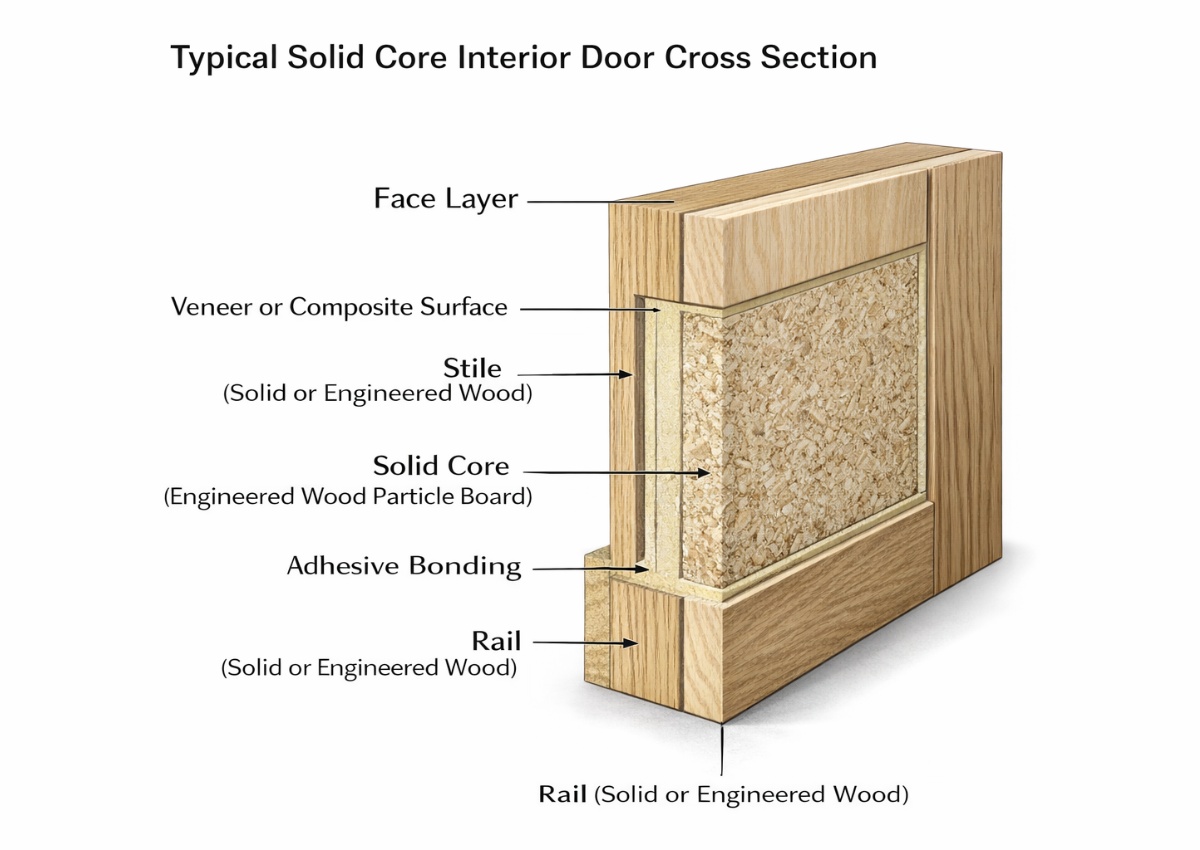
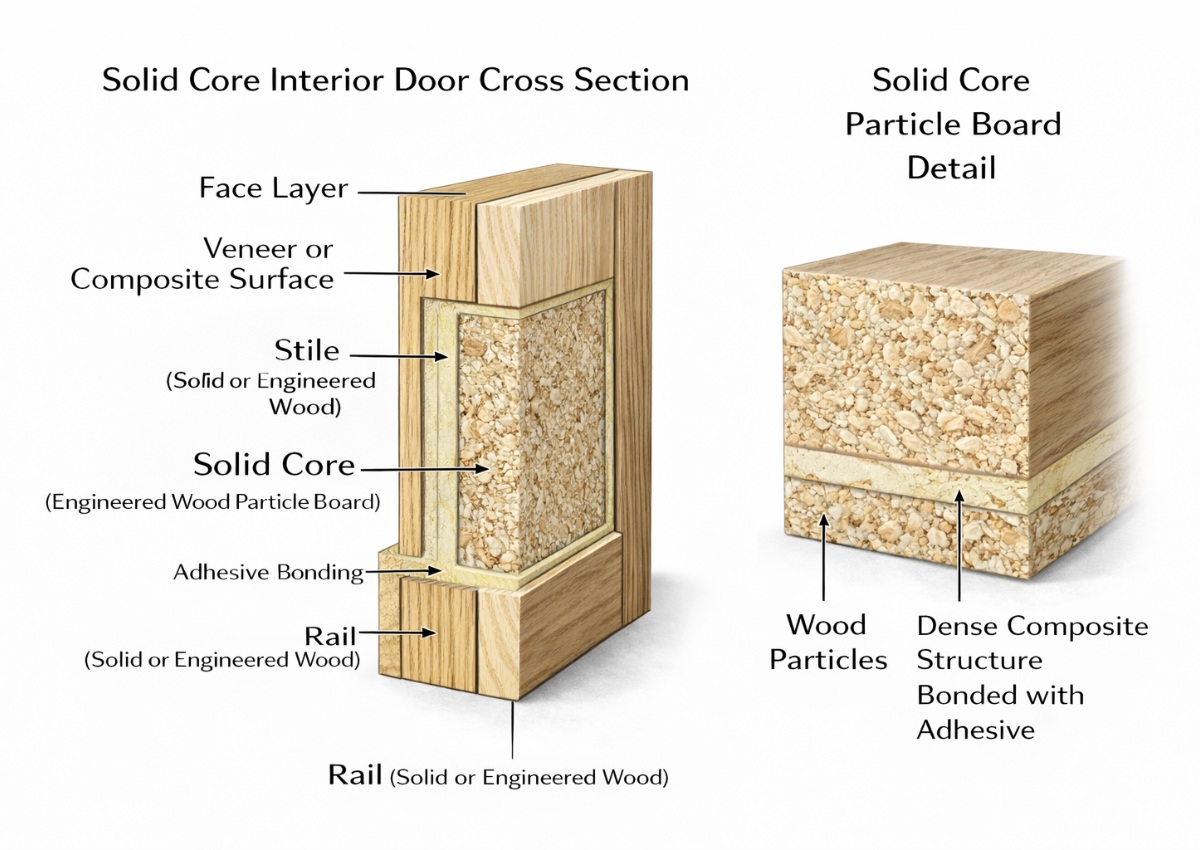
The defining characteristic of a solid core interior door is its internal core material. The core is typically manufactured from engineered wood components designed to provide uniform density and dimensional stability.
Common core materials include:
Laminated engineered wood blocks
Composite wood particle cores
High-density fiber-based core materials
These materials are bonded under controlled pressure to create a solid, stable internal structure that resists deformation over time.
Stiles and Rails Structure
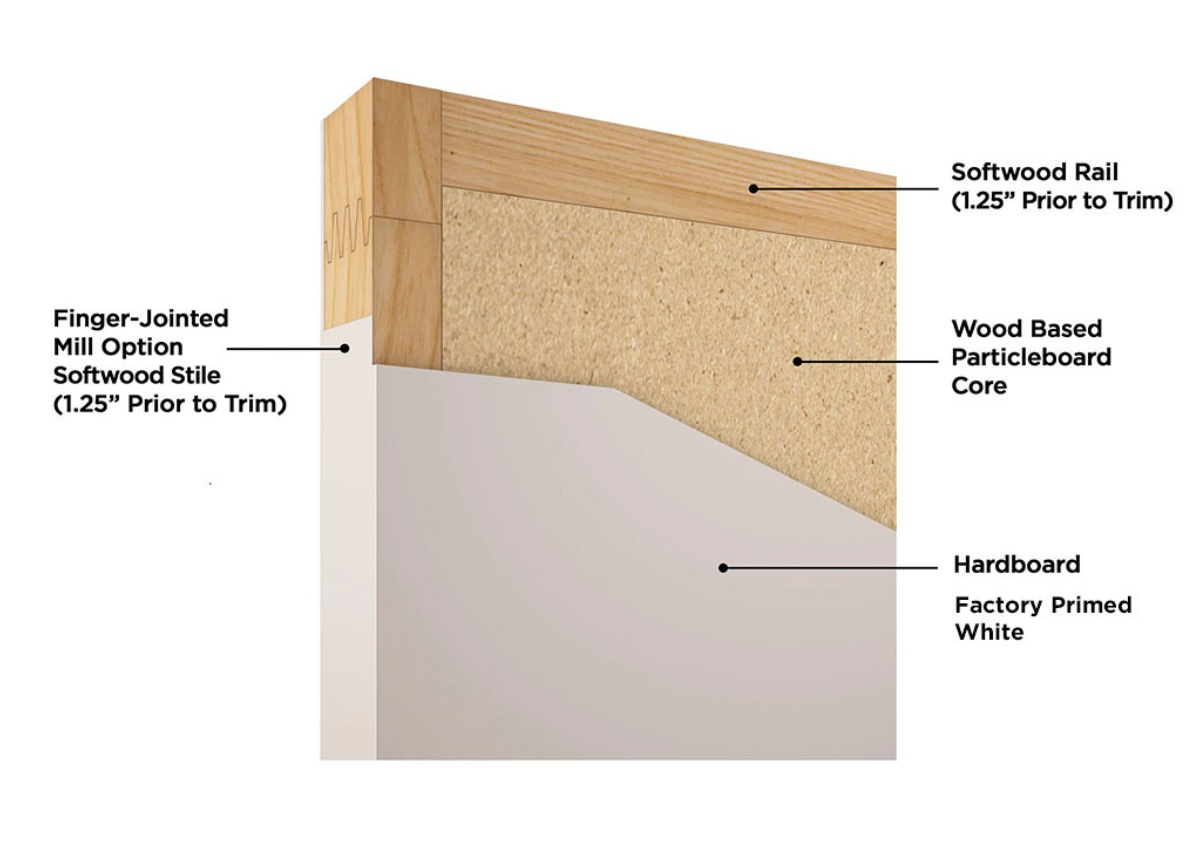
Stiles and rails form the structural perimeter of a solid core interior door. These components play a critical role in maintaining door alignment and supporting hardware installation.
Their primary functions include:
Stiles and rails are typically manufactured from solid or engineered wood selected for strength and uniformity.
Face Layers and Surface Materials
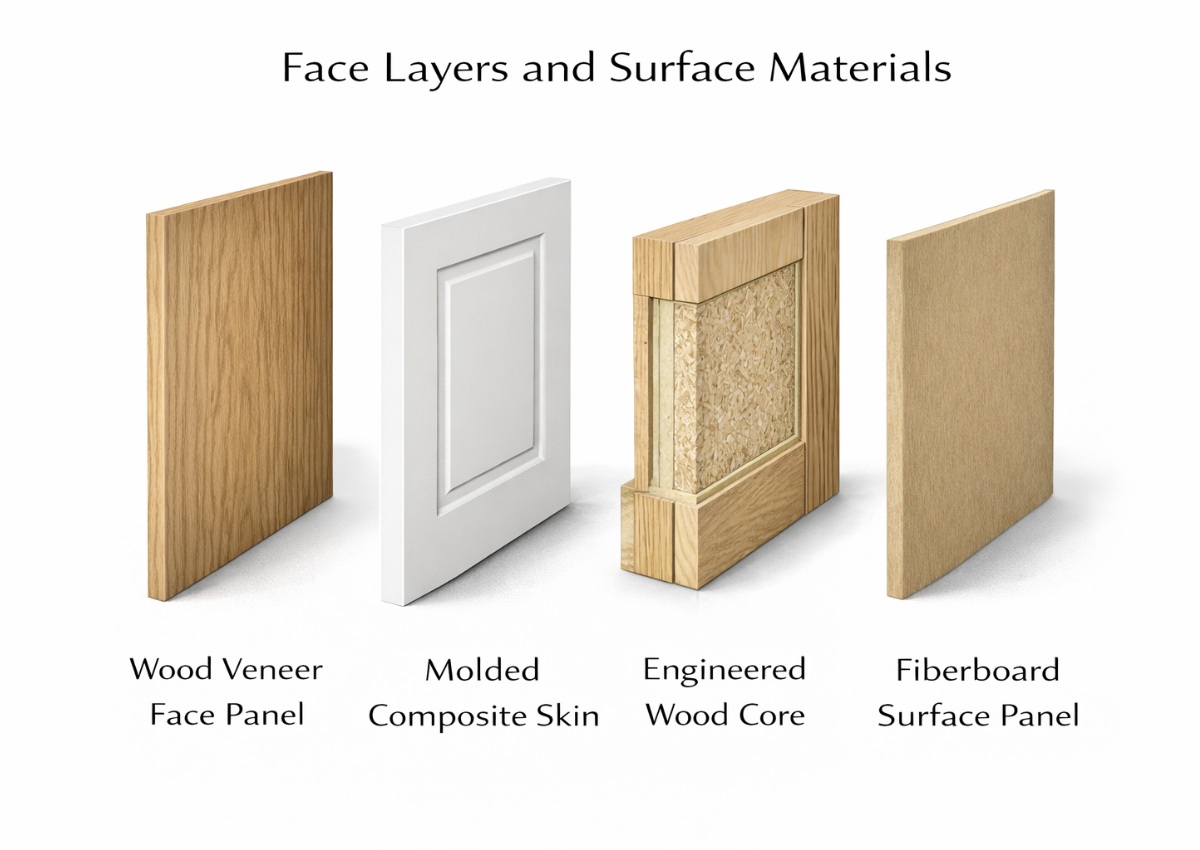
The internal core is enclosed by face layers that protect the structure while allowing for various surface finishes. These layers also contribute to the door’s rigidity and surface durability.
Typical face materials include:
These surfaces enable painting, staining, or decorative panel designs without compromising internal performance.
Structural Performance Characteristics
The dense internal construction of solid core interior doors provides measurable structural advantages over hollow alternatives. Increased mass improves resistance to impact and reduces flex during regular use.
Key performance characteristics include:
These attributes contribute to extended service life in high-traffic interior environments.
Acoustic Performance Considerations
Solid core interior doors offer improved sound attenuation due to their increased mass and internal density. While not classified as soundproof assemblies, they help reduce airborne sound transmission between interior spaces.
This makes them suitable for:
Fire and Safety Context
Solid core construction provides a more robust base for fire-rated interior door assemblies when combined with appropriate materials and manufacturing methods. The solid internal structure supports enhanced resistance compared to hollow constructions.
Fire performance depends on the complete door assembly, including core materials, surface layers, and installation methods.
Typical Applications
Solid core interior doors are commonly specified in:
Their balance of durability, acoustic control, and structural integrity makes them suitable for demanding interior applications.
Solid core interior doors are commonly used in residential and multi-unit interior applications. To explore available interior door styles and configurations, visit our interior doors collection.